Make our competitive advantage your advantage
Backed by institutional-quality3 bonds
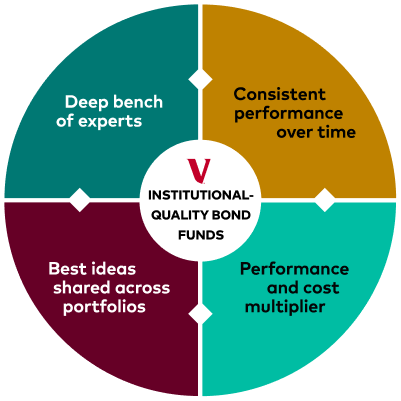
Our formula for institutional quality
Four pillars. One uncompromising standard.
- Consistency
- Expertise
- Performance and cost
Consistent performance powered by smart and repeatable active strategies
Bonds can act as ballast of a resilient portfolio, helping to provide steady, smooth performance. While some managers claim to achieve outsized returns, their higher-risk strategies often lead to volatile performance more akin to equities. Our high-information ratio strategies seek greater reliability. Instead of making concentrated bets, our managers partner with our researchers to spot opportunities at the security-picking level to help deliver repeatable returns for clients.
We strive to set the industry standard for consistency. That means consistent outperformance through different market cycles—just as your clients expect.
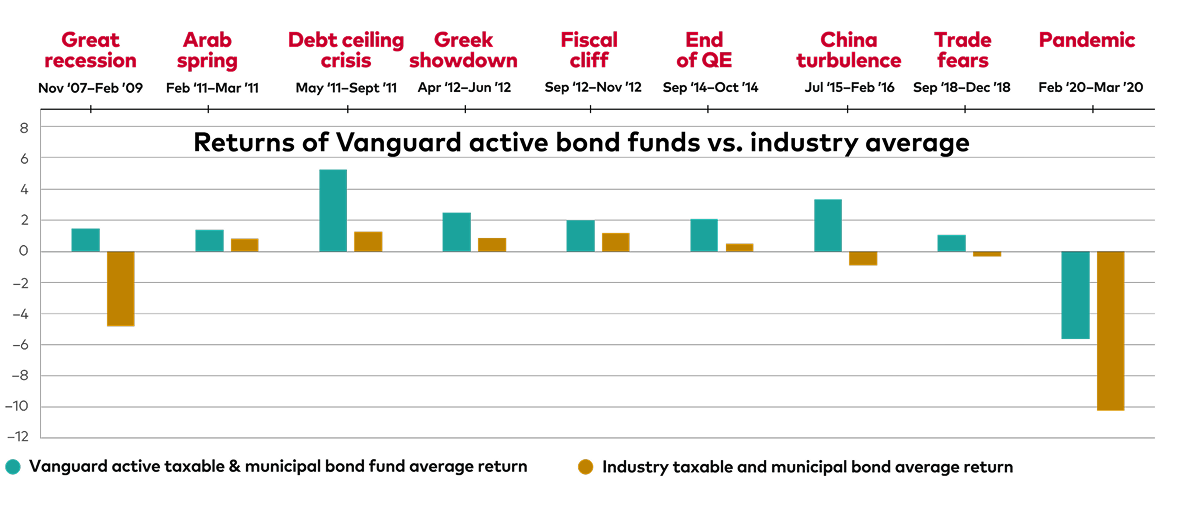
Sources: Vanguard, based on data from Morningstar, Inc.
Note that the competitive performance data shown represent past performance, which is not a guarantee of future results, and that all investments are subject to risks. For the most recent Vanguard fund performance, visit our website at www.vanguard.com/performance.
Best ideas shared across portfolios
Many other firms talk about the independent strength of their portfolio managers. They encourage each team to pursue unique exposures and unique strategies that are often fiercely guarded, even within the same firm. This can lead to many of their funds posting underwhelming performance, even amid a few so-called star funds.
Our approach is different. Our mission is outperformance across the full lineup. We believe our best active strategies should be shared across our portfolio management teams, ensuring that all your clients benefit from our best thinking. As a result of sharing our best ideas, 88% of our active bond funds and ETFs outperformed their peer-group averages over the last decade.1
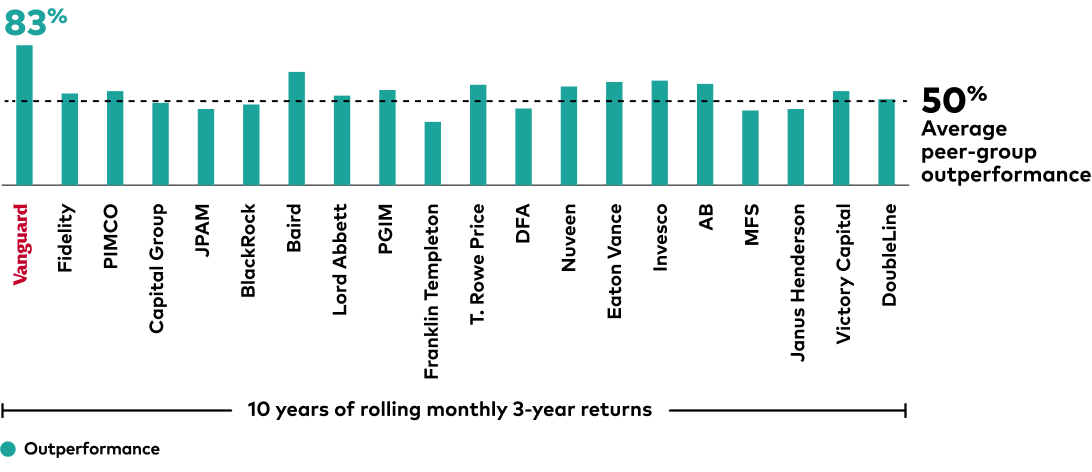
Source: Vanguard calculations using data from Morningstar, as of September 30, 2025.4
Note that the competitive performance data shown represent past performance, which is not a guarantee of future results, and that all investments are subject to risks. For the most recent Vanguard fund performance, visit our website at www.vanguard.com/performance.
Deep bench of experts

A performance and cost multiplier that compounds over time

Discipline that delivers

2 minutes
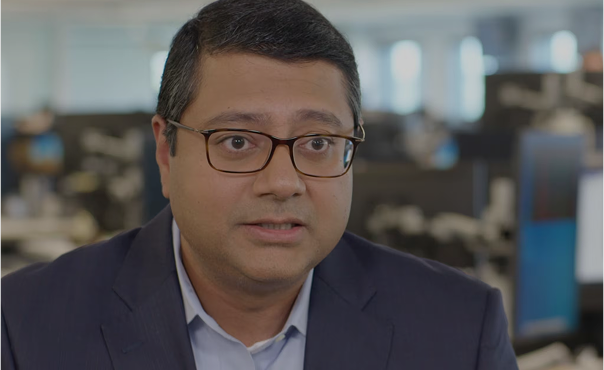
Silicon Valley Bank announced today it had lost $1.8 billion. Silicon Valley Bank customers withdrew $42 billion in deposits in one day. In 3 days, Silicon Valley Bank had failed. The immediate reaction of the market was panic selling. We needed to know if any of our investments were at risk or if there are opportunities for us to go after. I turned to my research team and said, "Let's do our homework." When you think of smart and repeatable strategies for us here at Vanguard, it really starts with our research-driven security selection for 20 different banks. Our team already had financial models built pulling in information from the bank's quarterly filings, other data sources. If we were to stress them on interest rate shocks, on commercial real estate shocks, on net interest margins, how does any particular bank fare? On Monday, we were convinced that here was an opportunity for us to buy when others are selling. We were deploying several billion dollars of capital. When the market sees a strong name like Vanguard Commit Capital, the market gets confidence that these banks are going to be okay. We're repeating this process over and over again for us to be able to generate returns in every single industry no matter what the economy is doing. Our very disciplined approach to taking risk is scalable and repeatable over and over again. There's always mispriced opportunities if you've done your homework.
1 minute 6 seconds
The Core Bond strategy is designed to give investors exposure to a broadly diversified predominantly higher quality aspect of the US fixed income market. The fund employs an active approach to investing in the fixed income market. Our objective within the strategy is to provide total returns in excess of the Benchmark, while also providing moderate levels of current income. One use case of the core Bond Fund is as a foundational building block within a diversified fixed income portfolio where the investor can complement this fund with allocation to other products that tilt on duration quality or region we do not rely on directional bets on the market but instead focus on strategies that can deliver. Outperformance over time on a consistent basis our goal is long-term client outcomes
Core Bond as foundational holding

1 minute 36 seconds
Vanguard Core Plus bond is an actively managed fund that gives investors broad exposure across fixed income market. Exposure starts with high quality segments of the US bond market including government mortgage and corporate bonds but can be supplemented with below investment grade sectors and debt from other countries including emerging markets. The fund is a great foundational piece for investors fix income portfolios. It is especially suited for those clients looking to gain exposure to Broad segments of fixed income via a single fund. The fund is best for investors who are comfortable with larger exposure to below investment grade sectors and that can benefit from outsourcing sector allocation and market timing decisions to the funds of professional managers compared to. The core bond fund, the plus and core Plus allows us to take additional exposure to high yield and Emerging Market sectors when the opportunities are right. This is likely to generate higher returns over time both from exposure to riskier sectors and from additional selection opportunities.
Core-Plus for higher risk-reward
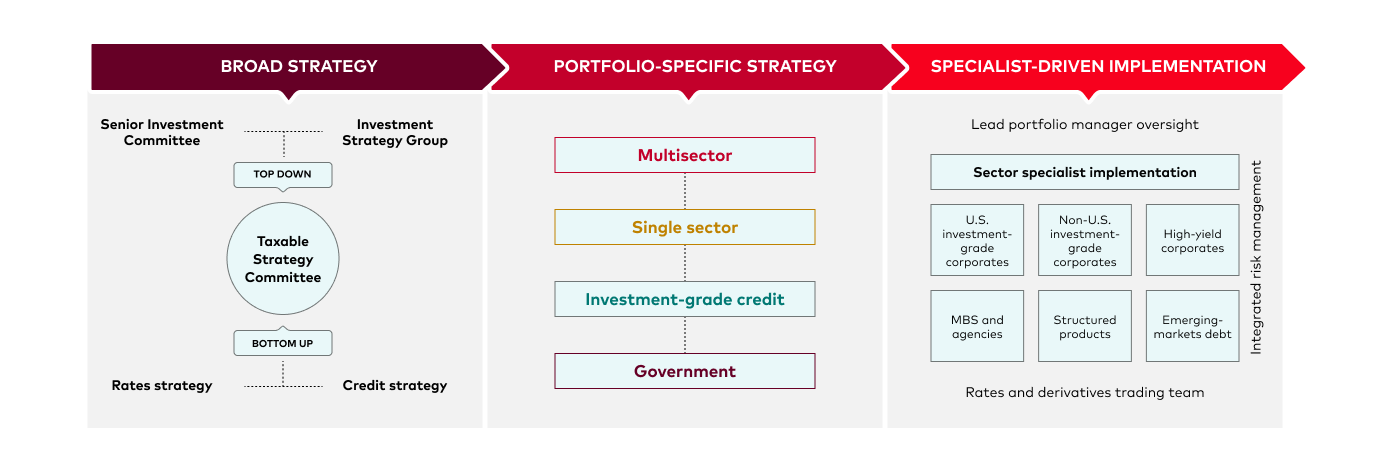
Investment process

Broad strategy development begins with our Senior Investment Committee, composed of the senior leaders of the active teams across the Fixed Income Group and key partners in the Investment Strategy Group. This step combines the top-down, longer-term macroeconomic outlooks with bottom-up sector expectations from our rates and credit strategy teams to form the taxable strategy. It also fosters an environment in which investment strategies are shared and debated before being put to work.

Next, portfolio managers, analysts, and traders tailor the broad strategy to each portfolio type. They review valuations, fundamentals, and technicals to find investment opportunities that they believe will deliver value without taking on undue risk.

Finally, lead portfolio managers collaborate with senior research analysts and risk managers to apply the portfolio strategy to the portfolio construction plan for each individual fund. Portfolio managers, traders, and analysts within each sector execute the plan.
Sara Devereux
CIO VCM, Global Head of Fixed Income
- Year started in investment industry: 1992
- Year started at Vanguard: 2019
- Education:
- B.S., University of North Carolina at Chapel Hill
- M.B.A., The Wharton School of the University of Pennsylvania
- Additional roles: Chair of the senior investment strategy team for Vanguard’s actively managed fixed income portfolios and a member of the firm’s Global Investment Committee
- Prior experience:
- Goldman Sachs: Mortgage-backed securities and structured products trading and sales
- HSBC: Risk management advisory and interest rate derivatives structuring
- AXA Equitable Life Insurance: Actuary

Sara Devereux
Christopher Alwine
CFA, Principal, Global Head of Credit
- Current specialty: Taxable bond market
- Year started in investment industry: 1990
- Year started at Vanguard: 1990
- Education:
- B.B.A., Temple University
- M.S., Drexel University
- Additional roles: Member of the senior investment committee at Vanguard that is responsible for developing macro strategies for the firm’s internally managed active fixed income funds
- Prior experience:
- Trading, credit research, and portfolio management in both taxable and municipal markets, as well as active and index funds

Christopher Alwine
Roger Hallam
CFA, Global Head of Rates
- Current specialty: Taxable bond market
- Year started in investment industry: 2000
- Year started at Vanguard: 2022
- Education:
- B.S., University of Warwick
- Additional roles: Member of the Vanguard Senior Leadership team and the Senior Investor team
- Prior experience:
- J.P. Morgan Asset Management: Senior global fixed income portfolio manager, chief investment officer for currencies

Roger Hallam
Paul Malloy
CFA, Head of Municipals
- Current specialty: Municipal bond market
- Year startedin investment industry: 2005
- Year started at Vanguard: 2005
- Education:
- B.S., Saint Francis University
- M.B.A., Wharton School of the University of Pennsylvania
- Prior experience:
- Head of Vanguard Fixed Income Group, Europe, and other various portfolio management positions in Vanguard's offices in the U.K. and U.S.
- Managed Vanguard's U.S. fixed income ETFs and index mutual funds

Paul Malloy
Arvind Narayanan
CFA, Portfolio Manager and Head of Investment-Grade Corporates
- Current specialty: Taxable bond market
- Year started in investment industry: 2002
- Year started at Vanguard: 2019
- Education:
- B.A., Goucher College
- M.B.A., New York University's Stern School of Business
- Prior experience:
- State Street Global Advisors: Managing director, head of investment-grade credit
- GE Asset Management: Senior vice president and portfolio manager for investment-grade credit; head trader for fixed income; portfolio manager-structured products

Arvind Narayanan
Daniel Shaykevich
Portfolio Manager and Head of Emerging Markets
- Current specialty: Taxable bond market
- Year started in investment industry: 2001
- Year started at Vanguard: 2013
- Education:
- B.S., Carnegie Mellon University
- Prior experience:
- BlackRock: Emerging market debt in dedicated and crossover portfolios; alternative investments

Daniel Shaykevich
Brian Quigley
CFA, Portfolio Manager and Head of MBS and Agencies
- Current specialty: Taxable bond market
- Year started in investment industry: 2003
- Year started at Vanguard: 2003
- Education:
- B.S., Lehigh University

Brian Quigley
Michael Chang
CFA, Portfolio Manager and Head of High-Yield
- Current specialty: Taxable bond market
- Year started in investment industry: 2000
- Year started at Vanguard: 2017
- Education:
- B.Com., University of British Columbia
- Prior experience:
- Goldman Sachs: Portfolio manager across several non-investment grade portfolios, senior credit analyst, head bank loan trader
- PIMCO and Deutsche Bank: Credit analyst, bank loan trader

Michael Chang
Mauro Favini
Emerging Markets Portfolio Manager
- Current specialty: Taxable bond market
- Year started in investment industry: 2008
- Year started at Vanguard: 2017
- Education:
- B.A., Hunter College
- M.B.A., The Wharton School of the University of Pennsylvania
- Prior experience:
- Marathon Asset Management: Portfolio manager focused on absolute return and long-only strategies

Mauro Favini
David Van Ommeren
Portfolio Manager and Head of Structured Products
- Current specialty: Taxable bond market
- Year started in investment industry: 1993
- Year started at Vanguard: 1991
- Education:
- B.S., Temple University
- M.S., Drexel University
- Prior experience:
- Led Vanguard's Global Operational Risk team within Investment Management, responsible for teams in the U.S., U.K., and Australia

David Van Ommeren
John Madziyire
CFA, Portfolio Manager and Head of U.S. Treasuries and TIPS
- Current specialty: Taxable bond market
- Year started in investment industry: 2002
- Year started at Vanguard: 2017
- Education:
- B.Com., University of Cape Town
- Post-graduate, University of Cape Town
- Prior experience:
- AXA Investment Managers: Portfolio manager across U.K., Euro, and Global government bond portfolios
- Legal and General Investment Management: Assistant fund manager and risk analyst

John Madziyire
Sarang Kulkarni
CFA, European Credit Portfolio Manager
- Current specialty: Taxable bond market
- Year started in investment industry: 2002
- Year started at Vanguard: 2015
- Education:
- B.S., University of Bombay
- Post-graduate diploma, Indian Institute of Management—Calcutta
- Prior experience:
- Schroders Investment Management: Co-lead manager of investment-grade, high-yield, and emerging market debt global credit funds
- Aerion Fund Management: Senior portfolio manager
- Peregrine Capital: Corporate financier
- Anderson Corporate Finance: Created innovative debt financing solutions for infrastructure, utilities, and acquisition financing sectors

Sarang Kulkarni
Justin Schwartz
Head of Municipal Index and Money Markets and Senior Portfolio Manager
- Current specialty: Municipal bond market
- Year started in investment industry: 2004
- Year started at Vanguard: 2004
- Education:
- B.S., University of Richmond

Justin Schwartz
Adam Ferguson
CFA, Municipal Portfolio Manager
- Current specialty: Municipal bond market
- Year started in investment industry: 2008
- Year started at Vanguard: 2004
- Education:
- B.S., Wilmington University
- Prior experience:
- Co-leading Vanguard’s high-yield investment team

Adam Ferguson
Stephen McFee
CFA, Municipal Portfolio Manager
- Current specialty: Municipal bond market
- Year started in investment industry: 2005
- Year started at Vanguard: 2005
- Education:
- B.A., East Stroudsburg University
- M.S., Saint Joseph's University
- Prior experience:
- Municipal bond trader

Stephen McFee
Mathew Kiselak
CFA, Head of Long-Term Municipal Portfolio Management
- Current specialty: Municipal bond market
- Year started in investment industry: 1987
- Year started at Vanguard: 2010
- Education:
- B.A., Pace University
- Prior experience:
- Wells Fargo Capital Management: Senior portfolio manager
- Evergreen: Director of municipals
- Nations Fund: Senior portfolio manager

Mathew Kiselak
James D’Arcy
CFA, Municipal Portfolio Manager
- Current specialty: Municipal bond market
- Year started in investment industry: 1996
- Year started at Vanguard: 2011
- Education:
- B.A., University of Colorado, Boulder
- Prior experience:
- Columbia Management: Senior portfolio manager

James D’Arcy
Grace Boraas
Portfolio Manager
- Current specialty: Municipal bond market
- Year started in investment industry: 2005
- Year started at Vanguard: 2013
- Education:
- B.S., Stetson University
- Prior experience:
- Income Research and Management: Municipal bond trader, risk management and portfolio construction analyst
