
Overview

Vanguard Total World Stock Index Fund seeks to track the performance of a benchmark index that measures the investment return of global stocks.


Investment approach


  • Seeks to track the performance of the FTSE Global All Cap Index.
  • Passively managed, using index sampling.
  • Fund remains fully invested.
  • Broad exposure across developed and emerging equity markets around the world, including the United States.
  • Low expenses minimize net tracking error.
Learn more
Investment Tools

Investment Tools

Access fund data to perform in-depth analysis

Fund facts


as of 02/27/2026
0.09%
YTD Returns (NAV)
as of 11/20/2026
1.46%

 
—

as of 10/31/2026
1.60%
Inception date
02/07/2019

$101.7B

$12.1B
Fund number
5028
CUSIP
922042619
Designation
World Stock
Benchmark
FTSE Global All Cap Index
Fees & minimum


None

None
Minimum investment
$3.0 K

Performance

Total returns

:
0.09%
RECENT RETURNS
AVERAGE ANNUAL
RECENT RETURNS and AVERAGE ANNUAL chart for VTWAX. Navigate to the performance summary table below for detailed values.
Month-endYTD1 YEAR3 YEAR5 YEAR10 YEAR
VTWAX (NAV)
———————
———————
———————
———————

Note: Except the most recent quarter, the expense ratios presented are the funds' actual operating expenses and they exclude any acquired fees and expenses, which result from the funds' holding in business development companies (BDCs). BDCs expenses are not direct costs paid by fund shareholders and are not used to calculate the funds' net asset value.

*FTSE All-World Index through December 18, 2011, and FTSE Global All Cap Index thereafter. Benchmark returns are adjusted for withholding taxes.
YEAR1ST QUARTER2ND QUARTER3RD QUARTER4TH QUARTER
error
Data not available for this Fund ID.
YEAR
error
Data not available for this Fund ID.
AS OF 1 MONTH3 MONTHYTD AS OF
YTD AS OF
1 YEAR3 YEAR5 YEAR10 YEAR
VTWAX (NAV)
error
Data not available for this Fund ID.

Quarterly commentary

  • For the three months ended September 30, 2026, global stocks posted modest gains. Generally resilient economic growth and corporate earnings in developed markets helped counter investor concerns about inflation, rising interest rates, and tensions in the Middle East.
  • The fund’s benchmark, the FTSE Global All Cap Index, returned 1.19% for the quarter.
  • Technology (+4.2%), energy (+12.4%), and financials (+2.3%) were the top contributors. They accounted for 53.1% of the index’s weighting at quarter-end and added about 2.2 percentage points to its result.
  • Industrials (–4.4%), consumer discretionary (–3.4%), and utilities (–7.9%) were the top detractors.
  • For the 12 months ended September 30, the index returned 16.57%. Technology (+32.8%), financials (+13.8%), and industrials (+9.7%) were the top contributors. Consumer discretionary (–8.9%) and real estate (–1.3%) were the only detractors.
The performance data shown represents past performance, which is not a guarantee of future results. Investment returns and principal value will fluctuate, so that investors' shares, when sold, may be worth more or less than their original cost. Current performance may be lower or higher than the performance data cited.
Performance data for periods of less than one year does not reflect the deduction of purchase and redemption fees. Maintenance, low balance, and service fees may be assessed by some funds. None of these fees are reflected in the performance figures. If these fees were included, the performance would be lower. All other performance data are adjusted for purchase and redemption fees, where applicable.
The performance of an index is not an exact representation of any particular investment, as you cannot invest directly in an index. Benchmark comparative indexes represent unmanaged or average returns on various financial assets, which can be compared with funds' total returns for the purpose of measuring relative performance.

Price & Distributions

Closing price

Closing price as of

NAV
NAV change
52-week high
52-week low
52-week difference

Realized/Unrealized gains

as of

Realized gain
Distribution schedule
Quarterly
Unrealized gains of NAV
Fiscal year-end date

Distribution

Use this table to view or export up to ten years of distributions for this fund.

No distribution records available.
error
Data not available for this Fund ID.

Portfolio


Market capitalization

as of 10/31/2026 

MARKET SIZEVTWAX +/- WEIGHT
Large ———
Medium/Large———
Medium ———
Medium/Small———
Small ———

More information about market capitalization

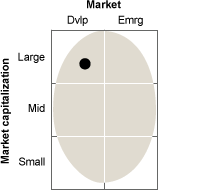
Style box


Stocks


Diversified index portfolio of international and U.S. stocks.

This is Equity/Stock Stylebox Image
Central Tendency legend

Central Tendency

Expected range legend

Expected range

How to read our stylebox
Fundamentals

FUNDAMENTALVTWAX
Number of stocks — —
Avg market cap — —
— —
% Emerging — —
% Developed — —
Earnings growth rate — —
% of ADR/GDR (as of )——
P/E ratio — —
P/B ratio — —
——
Return on equity — —
Foreign holdings — —

Holdings details

Sector categories are based on the Industry Classification Benchmark system (“ICB”), except for the “Other” category (if applicable), which includes securities that have not been provided an ICB classification as of the effective reporting period.

* Percentages may not add up to 100%. SEC regulations allow us to withhold a certain amount of holdings as proprietary information.

Weighted exposures

as of  
Column 3, sortable button, not sorted
error
Data not available for this Fund ID.
error
Data not available for this Fund ID.
error
Data not available for this Fund ID.

The composition of the portfolio's primary asset class. (i.e., for a bond fund, weighted exposures show the composition of the fund's bond allocation and will exclude other asset classes such as the short-term reserves).

Risk and volatility

as of
error
Data not available for this Fund ID.
error
Data not available for this Fund ID.

As with any investment, an investment in the fund could lose money over any time period. The fund’s share price and total return may fluctuate, potentially within a wide range. The principal risks of investing in the fund are summarized below. Each of the following risks could affect the fund’s performance:

  • General Market Risk. The markets in which the fund invests can be affected by a variety of factors. These factors, which can be real or perceived, may include economic, market, political, and regulatory conditions and developments as well as local, regional, or global events such as wars, military conflicts, natural disasters, and public health issues. In addition, investor sentiment and expectations regarding these factors can also impact the markets. Different parts of the market, including different industries and sectors as well as different types of securities, may react differently to factors that affect the market. These factors can contribute to market uncertainty, market volatility, and fluctuations in the value of the fund’s investments, thereby resulting in potential losses to the fund over short or long periods.
  • Investing in Equity Markets. The fund invests in the equity markets. Equity markets have historically been cyclical, having periods of time when stock values rise and fall. Market volatility can lead to significant fluctuations in stock values, resulting in potential losses to the fund.
  • Investing in Foreign Markets. Foreign markets can perform differently than U.S. markets. World events could adversely affect the value and/or liquidity of securities of foreign companies or foreign issuers, potentially in ways that differ from impacts to U.S. companies or issuers. Further, global economies and financial markets are becoming increasingly interconnected, which increases the possibility that conditions in one country or region could adversely impact a different country or region. In addition, the rights and remedies associated with investments in a fund that invests in foreign securities may be different than a fund that invests in domestic securities. To the extent that the fund invests a large portion of its assets in securities of issuers located primarily in one country or region, the fund’s performance may be hurt disproportionately by the poor performance of its investments in such country or region.
  • Investing in Emerging Markets. Investments in emerging markets are subject to higher degrees of risk and volatility than investments in developed markets. Compared with developed markets, emerging markets can have greater custodial and operational risks; less developed legal, tax, regulatory, financial reporting, accounting, and recordkeeping systems; and greater political, social, and economic instability than developed markets. In addition, emerging markets generally have less efficient trading markets with lower overall liquidity and more volatile currency exchange rates. Each of these risks can cause losses to the fund’s investments and/or impact the fund’s performance.
  • Currency Risk. The fund is subject to the risk that foreign currency will perform differently than U.S. dollars and increase the potential loss to the fund. Currency exchange rates may be volatile, move rapidly, and change as a result of changes in interest rates, inflation rates, government surpluses or deficits, and monetary policy or currency controls imposed by local governments or supranational entities such as the International Monetary fund. Changes in currency exchange rates can affect the value of the fund’s holdings.
  • Market Capitalization (Market Cap). Companies are generally classified into three types of market cap depending on their size: small-, mid-, and large-cap. Companies can be further classified into micro- or mega-cap. Different factors can affect each market cap uniquely, and historically small-and mid-cap stocks have typically been more volatile due to the effects of changing economic conditions. Large companies may not reach the same levels of growth or performance as smaller companies, and they may be slower to react to competitive challenges. The performance of funds that invest in a subset of market caps could diverge from the performance of a fund that is focused on a broader representation of the stock market.
  • Index Investing. The fund is subject to risks associated with index investing. Because the fund generally seeks to track the performance of the Target index regardless of how the Target index is performing, the fund’s performance may be lower than it would be if it were actively managed. Additionally, because the fund does not hold all of the securities included in the Target index, it is subject to the risk that the representative sample of securities selected by the advisor will, in the aggregate, vary from the investment profile of the full Target index. The performance of the fund’s investments, in the aggregate, may not match the investment performance of the Target index. This risk, known as tracking error risk, may be heightened during times of increased market volatility or under other unusual market conditions. The fund also could be negatively impacted by changes to the Target index made by the index Provider or by errors made by the index Provider. Any gains, losses, or costs associated with or resulting from an error made by the index Provider will generally be borne by the fund and, as a result, the fund’s shareholders.
  • Concentration Risk. Except as may be necessary to approximate the composition of its Target index, the fund will not concentrate its investments in the securities of issuers whose principal business activities are in the same industry or group of industries. If the Target index becomes concentrated and the fund needs to concentrate in the same industry or group of industries, its performance could be negatively impacted by the industry or industries in which it is concentrated.

Management

Vanguard Total World Stock Index Fund seeks to track the investment performance of the FTSE Global All Cap Index, a free-float-adjusted, market-capitalization-weighted index designed to measure the market performance of large-, mid-, and small-capitalization stocks of companies located around the world. The index includes stocks of companies located in various countries, including both developed and emerging markets. The fund invests in a broadly diversified sampling of stocks in the index that approximates the index’s key risk factors and characteristics. The Global Equity Index Management team applies disciplined portfolio construction and efficient trading techniques designed to help minimize tracking error and maintain close alignment with benchmark characteristics. The team uses proprietary software to implement trading decisions that accommodate cash flow and preserve index characteristics. Vanguard’s refined indexing process, combined with low management fees and efficient trading, has provided tight tracking, net of expenses.


Christine D. Franquin, Principal,Portfolio manager.

  • Advised the fund since 2013.
  • Worked in investment management since 2000.
  • B.A., Universitaire Faculteiten Sint Ignatius, Antwerpen Belgium.
  • J.D., University of Liege Belgium.
  • Master of Science in Finance, Clark University, Massachusetts.

Scott E. Geiger, CFA,Portfolio manager.

  • Advised the fund since 2017.
  • Worked in investment management since 2008.
  • B.S., Millersville University.

Proxy voting

Fund proxy policy

Proxy voting record

Please refer to the Literature section below to access the Statement of Additional Information (SAI), which details the fund's approach to proxy voting.

Literature


error

Data is unavailable at this time. Please try again later.