Launched in 1975, The Vanguard Group, Malvern, Pennsylvania, is among the world’s largest equity and fixed income managers. Sara Devereux, chief investment officer, Vanguard Capital Management, and global head of fixed income, has direct oversight responsibility for all money market, bond, and stable value portfolios managed by the Fixed Income Group. The Fixed Income Group offers actively managed investments in U.S. Treasury, corporate, and tax-exempt securities, as well as passively managed index portfolios. Since 1981, it has refined techniques in total-return management, credit research, and index sampling to seek to deliver consistent performance with transparency and risk control. The group has advised Vanguard Ultra-Short Bond ETF since 2021.
Overview
Vanguard Ultra-Short Bond ETF seeks to provide current income while maintaining limited price volatility.
Investment approach
- Short-term, investment-grade fixed income securities.
- Seeks current income with limited price volatility.
- Average maturity of 0–2 years.
The Ultra-Short Bond ETF is a stand alone product and is separate and distinct from the Vanguard Ultra-Short-Term Bond Fund (VUBFX and VUSFX). Differences in scale, certain investment processes, and underlying holdings are expected to produce different investment returns by the funds.

Investment Tools
Access fund data to perform in-depth analysis
Fund facts
as of 04/28/2026 | 0.10% |
|---|---|
| YTD Returns (MP) as of 11/23/2026 | 2.95% |
| YTD Returns (NAV) as of 11/23/2026 | 3.00% |
30 day as of 11/20/2026 | 4.84% |
as of 11/02/2026 | 4.21% |
| Inception date | 04/05/2021 |
| $9.9B | |
| $9.9B | |
| Fund number | 0931 |
| CUSIP | 92203C303 |
| Designation | Ultra-Short-Term-Bond |
| Benchmark | Bloomberg U.S. Treasury Bellwethers: 1 Year Index |
Fees & minimum
| None | |
| None | |
| Minimum investment |
Trading
| VUSB.IV | |
| Outstanding shares as of 10/31/2026 | 199,600,000 |
| ETF exchange | Cboe BZX U.S. Equities Exchange |
Performance
Total returns
0.10%
RECENT RETURNS
AVERAGE ANNUAL
| Month-end | YTD | 1 YEAR | 3 YEAR | 5 YEAR | 10 YEAR | ||
|---|---|---|---|---|---|---|---|
| ***VUSB (Market price) | — | — | — | — | — | — | — |
VUSB (NAV) | — | — | — | — | — | — | — |
| — | — | — | — | — | — | — | |
| — | — | — | — | — | — | — |
*Includes on-the-run (the most recently issued) U.S. Treasury bonds with a maturity of 1 year.
NAVMarket price
| YEAR | 1ST QUARTER | 2ND QUARTER | 3RD QUARTER | 4TH QUARTER |
|---|
| YEAR |
|---|
| AS OF | 1 MONTH | 3 MONTH | YTD AS OF | YTD AS OF | 1 YEAR | 3 YEAR | 5 YEAR | 10 YEAR | |
|---|---|---|---|---|---|---|---|---|---|
| VUSB ( Market price ) | |||||||||
VUSB (NAV) | |||||||||
The performance data shown represents past performance, which is not a guarantee of future results. Investment returns and principal value will fluctuate, so that investors' shares, when sold, may be worth more or less than their original cost. Current performance may be lower or higher than the performance data cited.
Performance data for periods of less than one year does not reflect the deduction of purchase and redemption fees. Maintenance, low balance, and service fees may be assessed by some funds. None of these fees are reflected in the performance figures. If these fees were included, the performance would be lower. All other performance data are adjusted for purchase and redemption fees, where applicable.
The performance of an index is not an exact representation of any particular investment, as you cannot invest directly in an index. Benchmark comparative indexes represent unmanaged or average returns on various financial assets, which can be compared with funds' total returns for the purpose of measuring relative performance.
Price & Distributions
Current price
Current market price as of ETMarket Price
Size
5x5
Daily change
$0.76 (0.65%)
Tick
UP
Open
$160.35
Volume
99,885
High
$162.07
Bid/ask spread
$0.06 (0.04%)
Low
$160.17
Closing price
Closing price as of
52-week low
Market price change
52-week difference
NAV
Premium/discount
NAV change
25-day avg volume
30-DAY MEDIAN BID/ASK SPREAD
50-day avg volume
52-week high
Premium/Discount chart
Realized/Unrealized gains
as of
Realized gain
Distribution schedule
Quarterly
Unrealized gains of NAV
Fiscal year-end date
Distribution
Use this table to view or export up to ten years of distributions for this fund.
No distribution records available.
Portfolio
Style box
BONDS
Diversified portfolio of short-term fixed income securities.
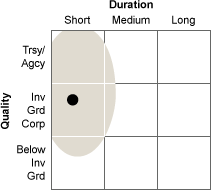

Central Tendency

Expected range
Fundamentals
| FUNDAMENTAL | VUSB | |
|---|---|---|
| Number of bonds | — | — |
| Yield to Maturity | — | — |
| Average duration | — | — |
| Average coupon | — | — |
Holdings details
as of 11/23/2026
* There may be deviations when applying fair value and other considerations.
Weighted exposures
as ofCredit-quality ratings are measured on a scale that generally ranges from AAA (highest) to D (lowest). “NR” is used to classify securities for which a rating is not available. NR securities may include internal money market funds, derivatives, and futures. U.S. Treasury, U.S. agency, and U.S. agency mortgage-backed securities appear under “U.S. Government.” Credit-quality ratings for each issue are either obtained from Bloomberg using ratings derived from Moody’s Investors Service (Moody’s), Fitch Ratings (Fitch), and Standard & Poor’s (S&P), or directly from Moody’s and S&P. Credit-quality ratings obtained from Bloomberg use the following methodologies: When ratings from all three agencies are available, the median rating is used; when ratings from only two of the agencies are available, the lower rating is used; and when one rating is available, that rating is used. Credit-quality ratings obtained directly from Moody’s and S&P use the higher rating for each issue. Exposures are calculated using investment book of record positions, which is based on when transactions occur, not when they settle, which can lead to the appearance of temporary negative cash balances or gross exposures greater than 100%.
The composition of the portfolio's primary asset class. (i.e., for a bond fund, weighted exposures show the composition of the fund's bond allocation and will exclude other asset classes such as the short-term reserves).
Risk and volatility
as of
As with any investment, an investment in the fund could lose money over any time period. The fund’s share price and total return may fluctuate, potentially within a wide range. The principal risks of investing in the fund are summarized below. Each of the following risks could affect the fund’s performance:
- General Market Risk. The markets in which the fund invests can be affected by a variety of factors. These factors, which can be real or perceived, may include economic, market, political, and regulatory conditions and developments as well as local, regional, or global events such as wars, military conflicts, natural disasters, and public health issues. In addition, investor sentiment and expectations regarding these factors can also impact the markets. Different parts of the market, including different industries and sectors as well as different types of securities, may react differently to factors that affect the market. These factors can contribute to market uncertainty, market volatility, and fluctuations in the value of the fund’s investments, thereby resulting in potential losses to the fund over short or long periods.
- Investing in Bond Markets. The fund may be impacted by the general condition of the bond markets and by factors that affect bonds and bond issuers. For example, as a general rule, bond prices and interest rates move in opposite directions. When interest rates rise, bond prices tend to fall, and when interest rates fall, bond prices tend to go up. Bond income also is affected by changes in interest rates. Interest rates can rise or fall for a number of reasons, including, but not limited to, central bank monetary policy, inflationary or deflationary pressures, and changes in general market and economic conditions. Changing interest rates, including, but not limited to, rates that fall below zero, could have unpredictable effects on the overall market and may expose the bond markets in particular to heightened volatility and potential illiquidity. The degree to which the fund is impacted by certain bond market risks may vary based on factors disclosed in its principal investment strategies, such as the types of bonds in which it invests and the overall credit quality, average maturity, and/or average duration of its bond holdings.
- Interest Rate Risk. During periods of rising interest rates, bond prices overall may decline, which could result in a decline in the fund’s value. The prices of longer-term bonds are more sensitive to changes in interest rates than the prices of shorter-term bonds.
- Income Risk. During periods of falling interest rates, the fund’s income may decline. The income paid by shorter-term bonds is subject to a higher degree of fluctuation than the income paid by longer-term bonds.
- Credit Risk. Credit risk refers to the chance that an issuer will default (fail to meet its credit obligations) or fail to make payments in a timely manner, which could result in a loss to the fund. In addition, negative perceptions of an issuer’s ability to make payments can cause the price of a security to decline. While all debt securities are subject to credit risk to some extent, those with higher credit quality ratings generally pose less credit risk than those with lower credit quality ratings.
- Bond Liquidity Risk. If the fund is unable to sell a security at an advantageous time or price, its returns may be reduced. There may be limited trading in the secondary market for certain debt securities, which could make them more difficult to value or sell.
- Call Risk. Certain bonds held by the fund may be callable. The issuer of a callable bond has the right to “call” (redeem) the bond before its maturity date. Calls on bonds held by the fund would result in the fund losing any price appreciation above the bond’s call price. In addition, because bond calls occur more frequently during periods of falling interest rates, the fund likely would be forced to reinvest the proceeds of any called bonds at a lower interest rate than that of the called bonds, resulting in a decline in the fund’s income and a potential loss in the value of the fund’s investments. Frequent bond calls and subsequent reinvestments of the proceeds also would increase the fund’s turnover rate.
- Prepayment Risk. Certain bonds are subject to risks associated with prepayment. Prepayment risk for callable bonds is described under Call Risk. With respect to mortgage-backed, asset-backed, and similar debt securities, prepayment typically refers to borrowers repaying their debt early (e.g., before the maturity date). Prepayment of bonds held by the fund would result in the fund losing any price appreciation above the amount repaid (or the bond’s call price, in the case of callable bonds). In addition, because prepayments occur more frequently in low interest rate environments, the fund likely would be forced to reinvest the proceeds from any prepayments at a lower interest rate than when the prepaid bonds were purchased, resulting in a decline in the fund’s income and a potential loss in the value of the fund’s investments. Frequent prepayments and subsequent reinvestment of the proceeds also would increase the fund’s turnover rate.
- Extension Risk. During periods of rising interest rates, certain bonds held by the fund may be paid off substantially more slowly than originally anticipated. As a result, the value of the bonds may fall, resulting in a decline in the fund’s income and a potential loss in the value of the fund’s investments.
- Active Management. The fund is actively managed. The advisor’s security selection and/or strategy execution could cause the fund to underperform relevant securities markets or other funds with a similar investment objective.
- Management of Certain Similar funds. The name, investment objective, principal investment strategies, and risks of the fund are similar to another separate fund managed by the fund’s portfolio managers. However, the investment results of the fund may be higher or lower than, and there is no guarantee that the investment results of the fund will be comparable to, that other fund.
- Investing in Derivatives. Investing in derivatives may present risks different from, and/or greater than, those associated with investing directly in stocks, bonds, or other types of investments. Derivatives could expose the fund to increased volatility and/or significant loss. Certain derivatives have an inherent leverage component, providing the fund exposure to a sizable position in an underlying asset with a relatively small upfront investment at the time the fund enters into the derivatives position. For these derivatives, an adverse change in the value or price of the underlying asset could result in a loss substantially greater than the amount invested in the derivative itself. Some derivatives require the fund to enter into a contract with a counterparty. If the counterparty is unable or unwilling to fulfill its contractual obligation, the fund may experience a loss. A liquid market may not always exist for the fund’s derivatives positions. The fund may be unable to sell or otherwise exit its derivatives position at desired times or prices, which could also result in a loss to the fund. Some derivatives, particularly OTC derivatives, can be complex and often are valued subjectively. Valuation may be more difficult in times of market turmoil since many investors and market makers may be reluctant to purchase complex instruments or quote prices for them. Improper valuations can result in increased cash payment requirements to counterparties or a loss of value to the fund.
Derivatives may not perform as intended, which may result in losses to the fund. For example, derivatives used for hedging or as a substitute for a portfolio instrument may not provide the expected benefits, particularly during adverse market conditions. The use of derivatives is also subject to legal risk, which includes the risk of loss resulting from insufficient or unenforceable contractual documentation, insufficient capacity or authority of the fund’s counterparty, and operational risk, which includes documentation or settlement issues, system failures, inadequate controls, and human error. - ETF Share Trading. The fund’s ETF shares are listed for trading on Cboe BZX Exchange, Inc. and individual investors may only buy and sell them on the secondary market at market prices. Although it is expected that the market price of an ETF share typically will approximate its net asset value (NAV), there may be times when the market price of an ETF share and its NAV differ significantly. Disruptions to creation and redemption transactions, the existence of significant market volatility, or potential lack of an active trading market for ETF shares (including through a trading halt), as well as other factors, may result in ETF shares trading significantly above (at a premium) or below (at a discount) the fund’s NAV or the intraday value of the fund’s holdings. Thus, you may pay more or less than NAV when you buy ETF shares on the secondary market, and you may receive more or less than NAV when you sell those shares.
- Authorized Participants. Only authorized participants may engage in creation or redemption transactions directly with the fund. The fund has a limited number of financial institutions that may act as authorized participants. The fund’s authorized participants are not obligated to engage in creation or redemption transactions. To the extent that the fund’s authorized participants are unable to or choose not to proceed with creation and/or redemption transactions with respect to the fund and no other authorized participants step forward to engage in creation or redemption transactions with the fund, the fund’s ETF shares may trade at a discount to NAV and possibly face trading halts and/or delisting.
Management
Vanguard Ultra-Short Bond ETF seeks to provide current income while maintaining limited price volatility, and aggregate performance consistent with ultra-short-term, investment-grade fixed income securities. It is expected to maintain a dollar-weighted average maturity of 0 to 2 years. Under normal circumstances, the fund will invest at least 80% of its assets in fixed income securities. Vanguard Fixed Income Group, the fund’s advisor, emphasizes sectors and securities that represent good relative value, while modestly adjusting portfolio duration to reflect the near-term interest rate outlook, shape of the yield curve, and other factors.
Literature
Vanguard ETF® Shares are not redeemable with the issuing fund other than in very large aggregations worth millions of dollars. Instead, investors must buy and sell Vanguard ETF Shares in the secondary market and hold those shares in a brokerage account. In doing so, the investor may incur brokerage commissions and may pay more than net asset value when buying and receive less than net asset value when selling.
Vanguard ETF® Shares can be bought and sold only through a broker (who may charge a commission) and cannot be redeemed with the issuing fund. The market price of Vanguard ETF Shares may be more or less than net asset value. Investments are subject to market risk. Go to the performance page to read more about risk and volatility.
***Effective July 15, 2024, the market price returns are calculated using the official closing price as reported by the ETF’s primary exchange. Prior to July 15, 2024, the market price returns were calculated using the midpoint between the bid and ask prices as of the closing time of the New York Stock Exchange (typically 4 p.m., Eastern time). The returns shown do not represent the returns you would receive if you traded shares at other times.
Quarterly commentary