
Overview

Vanguard California Intermediate-Term Tax-Exempt Fund seeks to provide a higher level of current income than shorter-term bonds, but with less share-price fluctuation than longer-term bonds. The income is expected to be exempt from both federal and California personal income taxes. The fund is intended for California residents only.


Investment approach


  • Intermediate-term municipal bonds issued by California state, local, and regional government authorities.
  • Conservatively managed, using fundamental research.

The Vanguard California Intermediate-Term Tax-Exempt Fund is a stand alone product and is separate and distinct from the Vanguard California Tax-Exempt Bond ETF (VTEC). Differences in scale, certain investment processes, and underlying holdings are expected to produce different investment returns by the funds.

Learn more
Investment Tools

Investment Tools

Access fund data to perform in-depth analysis

Fund facts


as of 03/27/2026
0.14%
YTD Returns (NAV)
as of 11/16/2026
-0.16%

30 day as of 11/13/2026 
3.79%

as of 10/31/2026
3.36%
Inception date
03/04/1994

$18.1B

$1.5B
Fund number
0100
CUSIP
922021308
Designation
Muni California Interm/Short
Benchmark
Bloomberg Municipal California Intermediate Bond Index
Fees & minimum


None

None
Minimum investment
$3.0 K

Performance

Total returns

:
0.14%
RECENT RETURNS
AVERAGE ANNUAL
RECENT RETURNS and AVERAGE ANNUAL chart for VCAIX. Navigate to the performance summary table below for detailed values.
Month-endYTD1 YEAR3 YEAR5 YEAR10 YEAR
VCAIX (NAV)
———————
———————
———————
*Includes investment-grade tax-exempt bonds that are issued by the state government and local governments in California and have maturities of 5 to 10 years.
YEAR1ST QUARTER2ND QUARTER3RD QUARTER4TH QUARTER
error
Data not available for this Fund ID.
YEAR
error
Data not available for this Fund ID.
AS OF 1 MONTH3 MONTHYTD AS OF
YTD AS OF
1 YEAR3 YEAR5 YEAR10 YEAR
VCAIX (NAV)
error
Data not available for this Fund ID.

Quarterly commentary

  • For the three months ended September 30, 2026, U.S. bonds posted negative returns as Treasury yields rose and bond prices declined. The Federal Reserve raised interest rates in September amid persistently elevated inflation.
  • Global bonds returned –2.46% for the quarter, as measured by the Bloomberg Global Aggregate Index. U.S. bonds fared a little worse than the broader global bond market.
  • For the third quarter of 2026, the 2-year AAA municipal bond yield increased 122 basis points (bps), the 10-year AAA yield increased 124 bps, and the 30-year AAA yield increased 112 bps. For the 12 months ended September 30, 2026, the 2-year AAA municipal bond yield increased 130 bps, the 10-year AAA yield increased 120 bps, and the 30-year AAA yield increased 94 bps. (A basis point is one hundredth of a percentage point.)
  • Total issuance for the third quarter was $183 billion, an increase of less than 1% from the second quarter of 2026. Third-quarter 2026 issuance is 12% higher than it was for the third quarter of 2025. At quarter-end, the attractiveness of high-rated municipals relative to Treasuries, expressed as a ratio at the 10-year maturity point, stood at 78%.
  • For the quarter, Vanguard California Intermediate-Term Tax-Exempt Fund Admiral Shares underperformed its benchmark, the Bloomberg California Intermediate Municipal Index (–4.87%), and the average return of its peers (–4.82%). A long duration position meaningfully detracted from performance, while the barbell maturity strategy modestly added. Credit quality positioning had no impact over the period. Sector allocation detracted from performance, most notably from an overweight to universities and an underweight in industrial development revenue bonds, while an overweight to housing and an underweight in school districts added. Security selection was meaningfully positive, most notably within industrial development revenue bonds, universities, general obligation bonds, and hospitals, while housing detracted.
  • For the 12 months ended September 30, 2026, the fund outperformed its benchmark, the Bloomberg California Intermediate Municipal Index (–3.45%), and the average return of its peers (–2.02%). A long duration position detracted from performance, while the barbell maturity strategy added. Credit quality positioning had no impact over the period. Sector allocation had no meaningful effect on performance. Security selection was meaningfully positive, most notably within general obligation bonds, universities, hospitals, and water and sewer, while housing detracted.

Note: Changes in yields may reflect rounding.

The performance data shown represents past performance, which is not a guarantee of future results. Investment returns and principal value will fluctuate, so that investors' shares, when sold, may be worth more or less than their original cost. Current performance may be lower or higher than the performance data cited.
Performance data for periods of less than one year does not reflect the deduction of purchase and redemption fees. Maintenance, low balance, and service fees may be assessed by some funds. None of these fees are reflected in the performance figures. If these fees were included, the performance would be lower. All other performance data are adjusted for purchase and redemption fees, where applicable.
The performance of an index is not an exact representation of any particular investment, as you cannot invest directly in an index. Benchmark comparative indexes represent unmanaged or average returns on various financial assets, which can be compared with funds' total returns for the purpose of measuring relative performance.

Price & Distributions

Closing price

Closing price as of

NAV
NAV change
52-week high
52-week low
52-week difference

Realized/Unrealized gains

as of

Realized gain
Distribution schedule
Quarterly
Unrealized gains of NAV
Fiscal year-end date

Distribution

Use this table to view or export up to ten years of distributions for this fund.

No distribution records available.
error
Data not available for this Fund ID.

Portfolio


Style box


BONDS


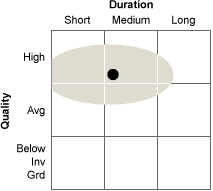
Portfolio of high-quality, intermediate-term California municipal bonds.

This is Bond/Fixed Income Stylebox Image
Central Tendency legend

Central Tendency

Expected range legend

Expected range

How to read our stylebox
Fundamentals

FUNDAMENTALVCAIX
Number of bonds — —
Yield to Maturity — —
Average duration — —
Alternative minimum tax — —
Average coupon — —

Holdings details

* Percentages may not add up to 100%. SEC regulations allow us to withhold a certain amount of holdings as proprietary information.

Weighted exposures

as of  
error
Data not available for this Fund ID.
error
Data not available for this Fund ID.

Credit-quality ratings are measured on a scale that generally ranges from AAA (highest) to D (lowest). “NR” is used to classify securities for which a rating is not available. NR securities may include internal money market funds, derivatives, and futures. U.S. Treasury, U.S. agency, and U.S. agency mortgage-backed securities appear under “U.S. Government.” Credit-quality ratings for each issue are either obtained from Bloomberg using ratings derived from Moody’s Investors Service (Moody’s), Fitch Ratings (Fitch), and Standard & Poor’s (S&P), or directly from Moody’s and S&P. Credit-quality ratings obtained from Bloomberg use the following methodologies: When ratings from all three agencies are available, the median rating is used; when ratings from only two of the agencies are available, the lower rating is used; and when one rating is available, that rating is used. Credit-quality ratings obtained directly from Moody’s and S&P use the higher rating for each issue. Exposures are calculated using investment book of record positions, which is based on when transactions occur, not when they settle, which can lead to the appearance of temporary negative cash balances or gross exposures greater than 100%.

error
Data not available for this Fund ID.

The composition of the portfolio's primary asset class. (i.e., for a bond fund, weighted exposures show the composition of the fund's bond allocation and will exclude other asset classes such as the short-term reserves).

Risk and volatility

as of
error
Data not available for this Fund ID.
error
Data not available for this Fund ID.

As with any investment, an investment in the fund could lose money over any time period. The fund’s share price and total return may fluctuate, potentially within a wide range. The principal risks of investing in the fund are summarized below. Each of the following risks could affect the fund’s performance:

  • General Market Risk. The markets in which the fund invests can be affected by a variety of factors. These factors, which can be real or perceived, may include economic, market, political, and regulatory conditions and developments as well as local, regional, or global events such as wars, military conflicts, natural disasters, and public health issues. In addition, investor sentiment and expectations regarding these factors can also impact the markets. Different parts of the market, including different industries and sectors as well as different types of securities, may react differently to factors that affect the market. These factors can contribute to market uncertainty, market volatility, and fluctuations in the value of the fund’s investments, thereby resulting in potential losses to the fund over short or long periods.
  • Investing in Bond Markets. The fund may be impacted by the general condition of the bond markets and by factors that affect bonds and bond issuers. For example, as a general rule, bond prices and interest rates move in opposite directions. When interest rates rise, bond prices tend to fall, and when interest rates fall, bond prices tend to go up. Bond income also is affected by changes in interest rates. Interest rates can rise or fall for a number of reasons, including, but not limited to, central bank monetary policy, inflationary or deflationary pressures, and changes in general market and economic conditions. Changing interest rates, including, but not limited to, rates that fall below zero, could have unpredictable effects on the overall market and may expose the bond markets in particular to heightened volatility and potential illiquidity. The degree to which the fund is impacted by certain bond market risks may vary based on factors disclosed in its principal investment strategies, such as the types of bonds in which it invests and the overall credit quality, average maturity, and/or average duration of its bond holdings.
  • Investing in the Municipal Bond Market. In addition to the general risks associated with investing in bonds, municipal bonds are subject to unique risks. The values of the fund’s municipal bond holdings could be impacted significantly by economic, regulatory, political, or other developments or circumstances affecting municipal bond issuers. These developments or circumstances could create uncertainty in the municipal bond market and/or adversely impact the ability of municipal bond issuers to make principal and interest payments, which could result in a loss to the fund. Municipal bonds can vary from one another in a number of ways, which can impact their sensitivity to certain risks. For example, investing in revenue bonds, which make up a significant portion of the municipal bond market, will generally subject the fund to a higher risk of loss than investing in municipal bonds secured by the full faith, credit, and taxing power of the issuer (general obligation bonds). Because the interest and principal on revenue bonds is payable only from a particular stream of revenue, they generally carry more Credit Risk than general obligation bonds. Revenue bonds also tend to be more sensitive to economic conditions than general obligation bonds, which could make their prices more volatile. The fund also is subject to the risk that all or a significant portion of its municipal bond holdings will be affected in the same manner. Because many municipal bonds are issued to finance similar projects, conditions in related sectors could have an outsized impact on the municipal bond market. As a result, the fund may underperform funds that invest more broadly.
  • Tax-Exempt Income Risk. There is no guarantee that the interest payable on municipal bonds will remain exempt from federal, state, or local income taxes. Tax-exempt income from the fund’s municipal bond holdings could be declared taxable, possibly with retroactive effect, due to a variety of circumstances such as tax law changes, adverse interpretations by tax authorities, or noncompliant conduct by a municipal bond issuer. Any of these circumstances could cause the prices of municipal bonds to decline significantly or impair the fund’s ability to achieve its investment objective.
  • Interest Rate Risk. During periods of rising interest rates, bond prices overall may decline, which could result in a decline in the fund’s value. The prices of longer-term bonds are more sensitive to changes in interest rates than the prices of shorter-term bonds.
  • Income Risk. During periods of falling interest rates, the fund’s income may decline. The income paid by shorter-term bonds is subject to a higher degree of fluctuation than the income paid by longer-term bonds.
  • Credit Risk. Credit risk refers to the chance that an issuer will default (fail to meet its credit obligations) or fail to make payments in a timely manner, which could result in a loss to the fund. In addition, negative perceptions of an issuer’s ability to make payments can cause the price of a security to decline. While all debt securities are subject to credit risk to some extent, those with higher credit quality ratings generally pose less credit risk than those with lower credit quality ratings.
  • Municipal Bond Liquidity Risk. Limited trading in the municipal bond market and a relative lack of publicly available information about the financial condition of municipal bond issuers may make municipal bonds more difficult to value or sell than other types of debt securities. If the fund is unable to sell a security at an advantageous time or price, its returns may be reduced.
  • Call Risk. Certain bonds held by the fund may be callable. The issuer of a callable bond has the right to “call” (redeem) the bond before its maturity date. Calls on bonds held by the fund would result in the fund losing any price appreciation above the bond’s call price. In addition, because bond calls occur more frequently during periods of falling interest rates, the fund likely would be forced to reinvest the proceeds of any called bonds at a lower interest rate than that of the called bonds, resulting in a decline in the fund’s income and a potential loss in the value of the fund’s investments. If the proceeds from a called bond generate taxable income, the fund may need to distribute income subject to federal California personal income tax or to the federal alternative minimum tax. Frequent bond calls and subsequent reinvestments of the proceeds also would increase the fund’s turnover rate.
  • Extension Risk. During periods of rising interest rates, certain bonds held by the fund may be paid off substantially more slowly than originally anticipated. As a result, the value of the bonds may fall, resulting in a decline in the fund’s income and a potential loss in the value of the fund’s investments.
  • State-Specific Focus. The fund invests primarily in securities issued by California and its municipalities. Any adverse tax, legislative, or political developments in California may have far-reaching impacts on the overall California municipal bond market, which could adversely affect the fund’s holdings and/or the securities that are available for investment by the fund. In addition, the fund is more susceptible to the credit risk of and unfavorable developments in California than a fund that invests more widely. Unfavorable developments in any economic sector may have far-reaching ramifications on the overall California municipal bond market.
  • Active Management. The fund is actively managed. The advisor’s security selection and/or strategy execution could cause the fund to underperform relevant securities markets or other funds with a similar investment objective.

Management

Vanguard California Intermediate-Term Tax-Exempt Fund seeks moderate current income by investing at least 80% of its assets in municipal securities exempt from federal and California taxes. These municipal bonds are generally of intermediate maturity. The fund also may invest up to 20% in California alternative minimum tax bonds. The fund is conservatively managed, emphasizing well-diversified, highly-rated municipal securities. Although the fund has no limitation on the maturity of individual securities, its dollar-weighted average nominal maturity is expected to be between 6 and 12 years.

Grace Boraas,Portfolio manager.

  • Advised the fund since 2025.
  • Worked in investment management since 2005.
  • B.S., Stetson University.

Adam M. Ferguson, CFA,Portfolio manager.

  • Advised the fund since 2013.
  • Worked in investment management since 2008.
  • B.S., Wilmington University.
  • M.B.A., Drexel University.

Literature


error

Data is unavailable at this time. Please try again later.