


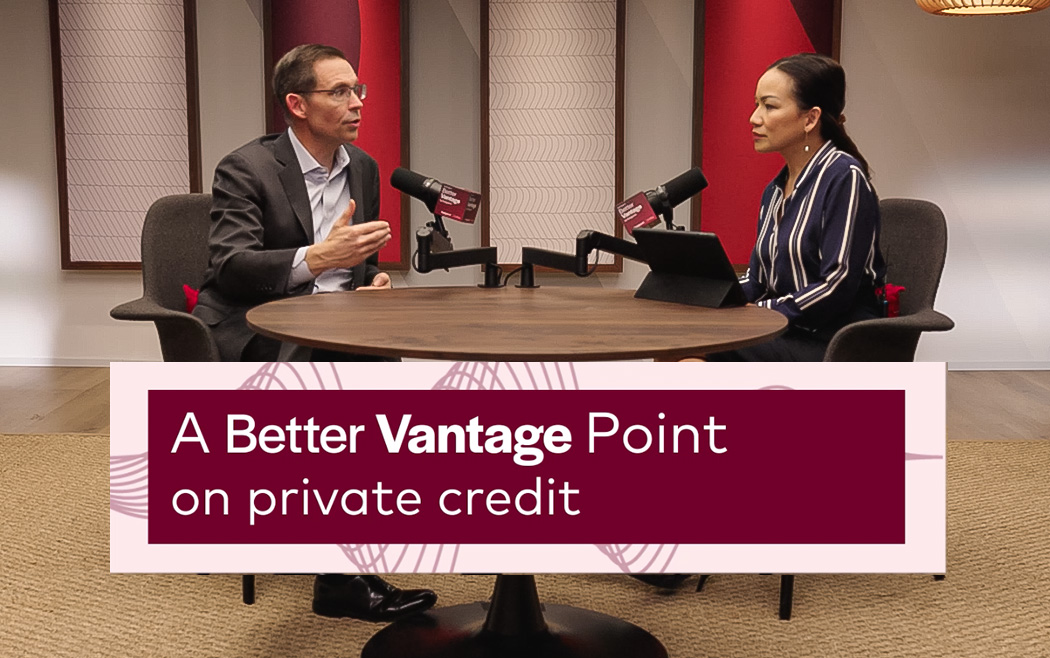
1 minute 29 seconds
Christine Kashkari: So, Joe, we've seen growth in private credit and along with it, a lot of headlines raising concerns about risks not just in private credit but also private markets in general. Are these unfounded?
Joe Davis: I think there's an important question that you could ask of private assets, but I would extend it to even public markets as well. And what I mean by that is there's always instances where you'll have pressure on individual companies. So companies fail in the public sector. Which is why I think investors need to know two things.
They need to know what they own, and they have to have either an investment vehicle or an asset manager or an advisor, that is doing the due diligence on those holdings and companies. And are the risk positions in the funds appropriate for what they're trying to achieve in their portfolio? And that's, I would say I would have said it ten years ago, I would say it today, I would say ten years from now.
I would just encourage investors, if they're concerned about those headlines, let's take a breath and let's zoom out and say, "What was the role of this asset in the portfolio to begin with, our strategy? And then do we have a good handle on the risk factor exposures and what it's going to do for me in my portfolio? What is that net-of-fee return expectation? And is that worth the risk that I'm incurring?" And just continually have that, that conversation, regardless of what the headline is in the marketplace today.
Amid rising concerns about private credit and a surge of cautionary headlines, Joe Davis, Vanguard global chief economist, shares a steady, strategic perspective with Christine Kashkari, editorial director of WSJ Custom Programming and cohost of the Better Vantage by Vanguard podcast series. While risks exist in both private and public markets—and company failures are inevitable, notes Davis—investing with clarity and confidence are key.
Davis emphasizes two foundational principles: Investors must clearly understand what they own, and they must trust that their asset managers or advisors are conducting thorough due diligence. Rather than reacting to market noise, he urges investors to step back and reassess the original intent of private credit in a portfolio, saying, “Let’s take a breath … and say, ‘What was the role of this asset in the portfolio to begin with? [What was] our strategy?’”
This question invites reflection, not reaction. Investors should continually evaluate whether the risk exposures, return expectations (net of fees), and overall role of private credit still align with their long-term goals.
Watch the video for a deeper look at navigating private markets with purpose and discipline.

Notes:
- All investing is subject to risk, including the possible loss of the money you invest. Diversification does not ensure a profit or protect against a loss.
- This content was created by Custom Content from WSJ, a unit of The Wall Street Journal Advertising Department.
- Private investments involve a high degree of risk and, therefore, should be undertaken only by prospective investors capable of evaluating and bearing the risks such an investment represents. Investors in private investments generally must meet certain minimum financial qualifications that may make it unsuitable for specific market participants.